
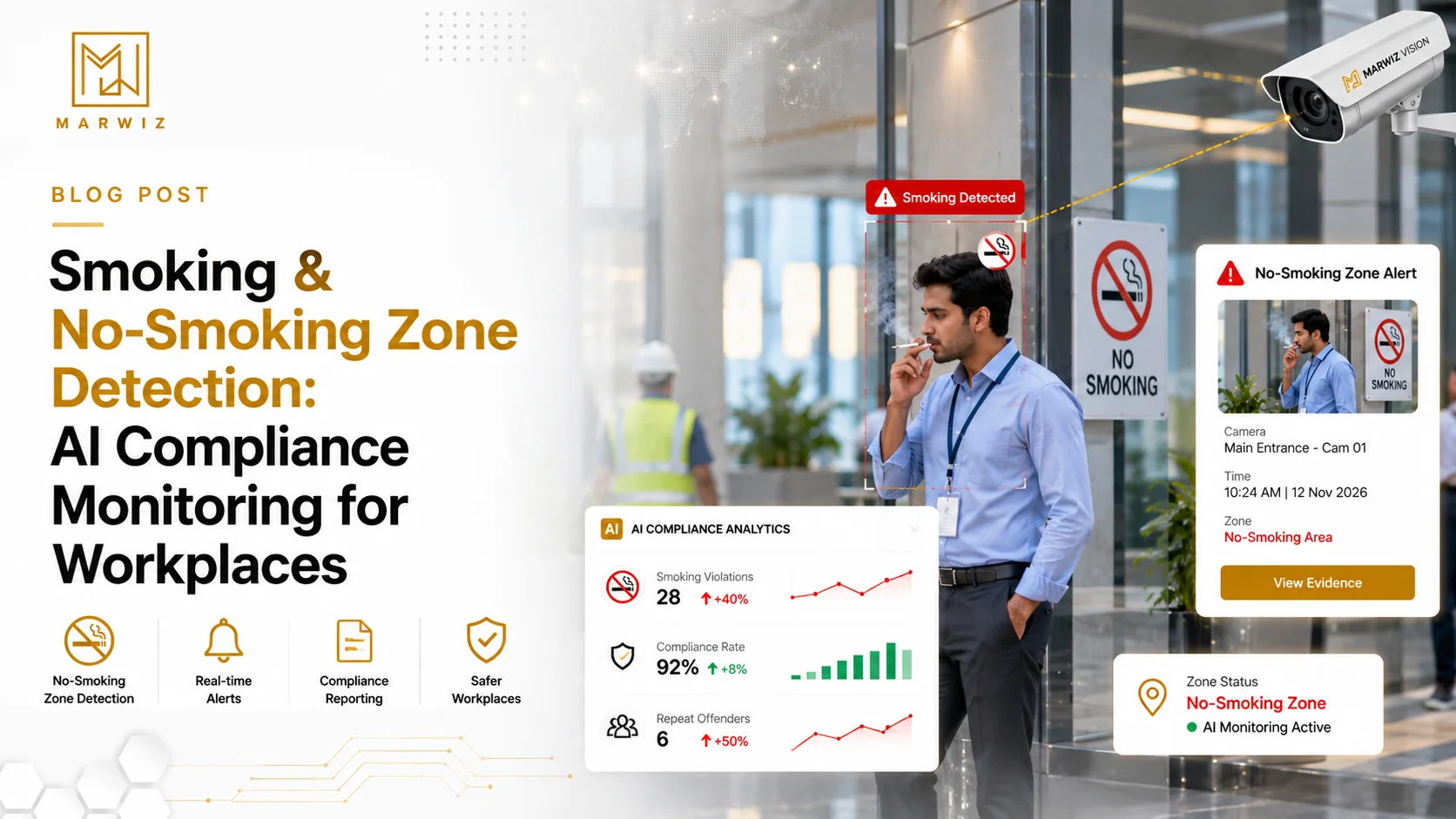
Almost every Indian workplace has a "No Smoking" board. Far fewer have a way to know whether anyone is following it. One compliance study of a tertiary health-care institution in a city that had been declared smoke-free visited 40 public places on its campus and found the overall compliance rate with the smoking ban was a mere 23%. A separate study in South Bengaluru found that among public places required to have designated smoking areas, only 19% complied. The rule is clear and the signs are up. What is missing is visibility. PubMed Centralnih
What Indian Law Requires of Workplaces
The Cigarettes and Other Tobacco Products Act (COTPA), 2003 is the base law. Its key points for anyone managing a premises:
- Section 4 bans smoking in public places. In 2008, the prohibition was extended to workplaces, and the rules specified the size and design of the No Smoking board and defined "designated smoking area." PubMed Central
- The duty sits with the person in charge. Under Rule 3 of the 2008 rules, the owner, manager, or person in charge of a public place must ensure that nobody smokes there, and no matchbox or ashtray should be provided. Nyaaya
- A named person must handle complaints. The rules require the owner or manager to designate a person to whom complaints can be made. Tobacco Control Laws
- Exceptions are narrow. Smoking areas are allowed at airports, hotels with 30 or more rooms, and restaurants with seating for 30 or more, but not for ordinary workplaces. Tobacco Control Laws
- The fine is small. A Section 4 violation carries a fine of up to ₹200 and no imprisonment. Section 172 BNSS
The low fine is often read as a sign that enforcement does not matter. Commentators note that a ₹200 fine is too small to deter habitual smokers and few officers are designated for enforcement. For an employer, the picture is different. The legal duty to keep the premises smoke-free rests with management, and the practical costs of a violation, such as fire risk, complaints, insurance questions, and audit findings, are far larger than ₹200. The Global Adult Tobacco Survey for India, cited in one study, found that around 26% of adults are exposed to second-hand smoke at the workplace. Dr. Abhishek Gandhinih
Why Signs and Patrols Don't Work
- Smoking is brief and hidden. A cigarette takes a few minutes and often happens behind a building, in a stairwell, or in a storeroom, exactly where guards are not.
- Patrols are predictable. People learn the route and the timing.
- No record. Even when a guard catches someone, there is rarely evidence, a timestamp, or a way to see whether the same spot is a repeat problem.
- Nobody owns the hotspot. Without data, management cannot say which zone, shift, or gate has the problem.
The stakes are higher in some environments. In a warehouse holding packaging or chemicals, a fuel yard, a pharmacy store, a paint shop, or a textile godown, a lit cigarette is an ignition source, not only a health rule. In hospitals, schools, and offices, the concern is second-hand smoke exposure and duty of care.
How AI Smoking Detection Works
The AI runs on the IP cameras already covering your zones. You mark the areas where smoking is prohibited, and the system watches them continuously.
- Zone setup: Define no-smoking zones on the camera view, such as a loading dock, stairwell, fuel yard, or ICU corridor. Designated smoking areas, where the law allows one, can be marked as permitted.
- Behavior and object detection: The model looks for cues such as a cigarette or beedi in hand or mouth, the hand-to-mouth motion, and visible smoke.
- Event logging: A confirmed detection creates a timestamped record with camera, zone, and an image or short clip.
- Alert and review: Security or the safety officer receives an alert, and a person confirms the event before any action is taken.
- Reporting: Events are aggregated by zone, shift, and week so management can see patterns and target the hotspot.
Signs and Patrols vs. AI Monitoring
| Factor | Signage + Guard Patrols | AI Smoking Detection |
|---|---|---|
| Coverage | Only where a guard happens to be | Every covered camera, 24x7 |
| Response time | Depends on the next patrol | Alert while the event is happening |
| Evidence | Verbal report, if any | Timestamped image or clip |
| Hotspot visibility | Anecdotal | Data by zone, shift, and week |
| Consistency | Varies by guard and shift | Same rule applied everywhere |
| Deterrence | Fades once the routine is learned | Sustained, because monitoring is continuous |
Where This Matters Most
- Warehouses, godowns, and logistics hubs: Stacked packaging and combustibles make an ignition source a real hazard. Detection helps management catch behavior before a fire, and it supports what your fire safety audit expects.
- Fuel, chemical, and pharma sites: Any area with vapors or flammables needs a strict no-ignition rule, and the log shows the rule is monitored.
- Hospitals and healthcare campuses: Smoking near wards and ICUs harms patients and staff. The health-care study above shows how easily compliance slips even inside a smoke-free campus.
- Offices, schools, and colleges: Stairwells, terraces, parking corners, and washrooms are typical hidden spots. Detection helps the administration act on complaints with evidence.
- Hotels and restaurants: These are the exceptions where designated smoking areas are allowed. Detection helps confirm that smoking stays inside the designated zone and out of lobbies, corridors, and guest rooms' surrounding areas.
What to Check Before You Deploy
| Check | What to Ask Your Vendor |
|---|---|
| Real-world accuracy | A cigarette is a small object. How does the model perform at your camera distance, at night, and with vapes, incense, or steam that can look like smoke? Ask for a pilot on your own cameras. |
| Camera fit | What height, angle, and resolution are needed for reliable detection in the zone? |
| Human verification | Can an operator review each alert before any action is taken? |
| Zone flexibility | Can you set different rules for no-smoking zones and designated smoking areas? |
| Reporting | Can you see violations by zone, shift, and period, and export them for audits? |
| Privacy and retention | How long are images and clips stored, who can view them, and how does this fit the Digital Personal Data Protection Act, 2023? |
| Policy readiness | Do you have a written policy and a communication plan so staff know monitoring exists? |
Using It Fairly
Detection works best when it supports a clear, communicated policy and not a surprise. Tell staff and visitors that monitoring is in place, use the first weeks to raise awareness, and keep a human in the loop to confirm events. Where a designated smoking area exists, make sure people know where it is. The aim is fewer violations, not more penalties.
From Signage to Evidence
A No Smoking board states a rule. Detection shows whether the rule is being followed. Management gets a clear picture of where and when violations happen, a record for audits and insurers, and a faster response in the places where smoking is most dangerous.
Marwiz Vision runs this kind of detection on the same platform as its restricted-area monitoring, PPE detection, and fire detection. A smoking alert, a restricted-zone breach, and a fire alert can then appear in one dashboard, with events logged and reported in one place.