
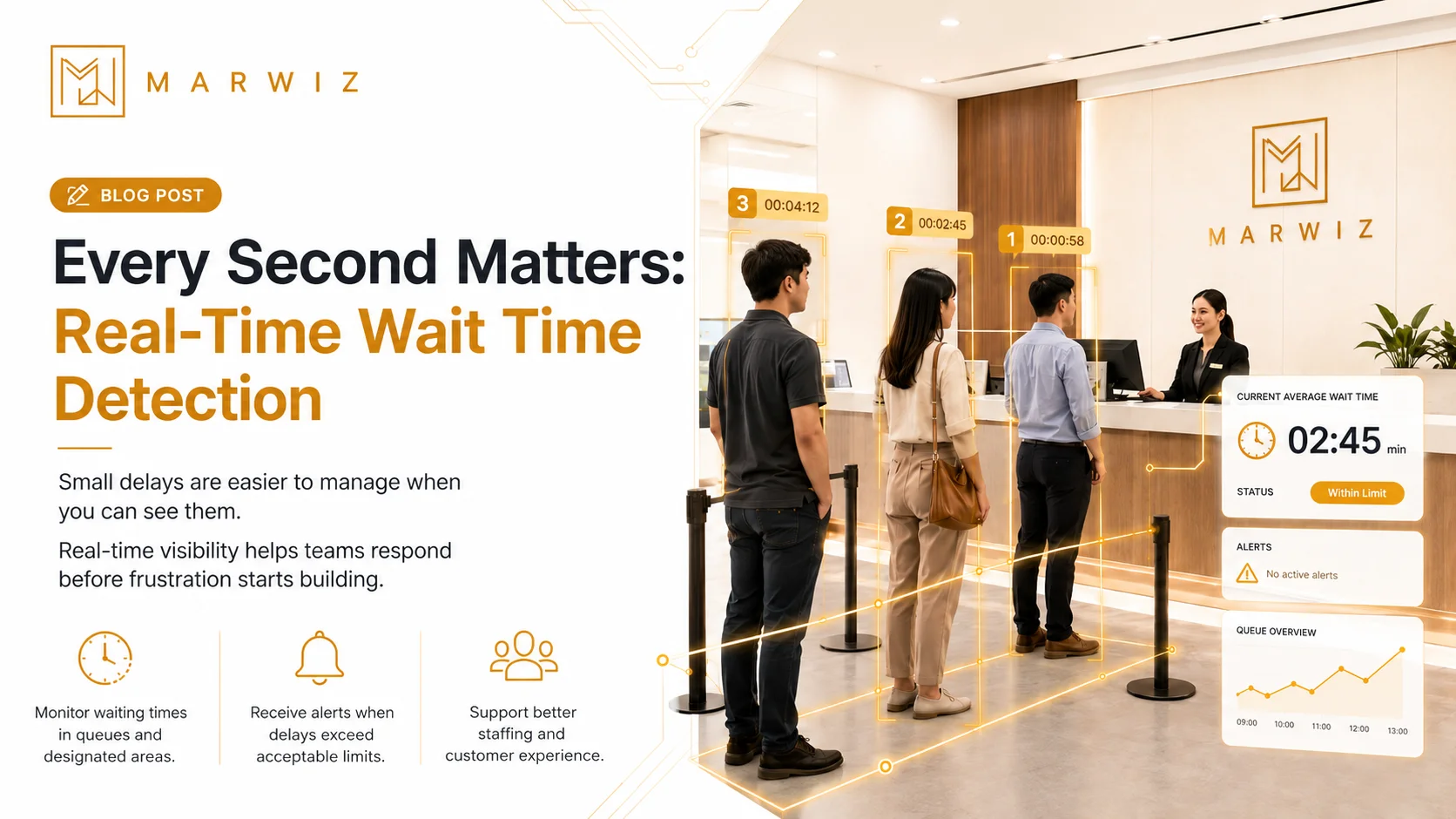
A queue rarely becomes a problem all at once. It starts with one person standing just a little too long. Then another joins. Before anyone notices, a manageable line turns into a frustrated crowd.
In offices, banks, and retail spaces, people usually do not complain the second they start waiting. They complain when it feels like nobody knows they are there. By then, nobody is really frustrated by the number of minutes. They are frustrated because the line stopped moving and nobody seems to know.
Most facilities already have cameras watching these spaces. The problem is that traditional CCTV records the activity. It does not tell anyone that people have been waiting too long. Without the ability to measure or alert staff about excessive waiting periods in real time, managing delays stays a manual task.
When Waiting Starts Going Unnoticed
Without a reliable way to measure waiting periods, tracking delays is mostly guesswork. The video feed simply documents the event. It does not measure how long someone has actually been waiting.
If you manage a busy public service center or a hospital reception area, you usually find out about excessive wait times only after dissatisfaction sets in. By the time someone walks up to ask how much longer it will take, the delay has usually been there for several minutes. Relying on visual estimates leaves operations teams reacting to inefficiency rather than preventing it.
Seeing the Delay Before Customers Do
The cameras are already there. The challenge is turning what they see into something useful.
Facilities do not need to replace their existing hardware to gain better visibility. Marwiz Vision uses AI analytics to power a person wait time detection system. The software tracks how long people spend waiting in lines or designated zones. And because it works with the CCTV and monitoring systems many facilities already have, getting started does not require replacing existing infrastructure.
But not every queue is a problem. That's why acceptable wait times can be defined in advance. Once those thresholds are crossed, the system knows when the delay needs attention.
Responding Before Delays Become Frustrations
Small delays are much easier to manage when people know about them early.
When waiting times go beyond those limits, the system sends a real-time alert. That gives teams a chance to step in before frustration starts building.
Speed matters, but that isn't really the point. The real value comes from avoiding the moment when visitors begin wondering whether anyone has noticed they are waiting.
Where Real-Time Visibility Matters Most
Busy periods can disrupt customer flow inside banks and financial institutions. Better visibility helps teams keep things moving while supporting overall bank security.
Hospitals and clinics deal with a different challenge. Waiting areas need constant attention, and having a clearer picture of delays supports care coordination while reinforcing hospital safety protocols.
Retail stores and customer service desks rely heavily on speed. Long checkout lines affect the overall experience, and early visibility gives teams a chance to respond before frustration starts building.
Airports, metro stations, and public service centers deal with changing traffic levels every day. Better visibility makes those changing traffic levels easier to manage.
Small Delays Are Easier to Manage When You Can See Them
When things are busy, small patterns are easy to miss. Looking back over time often reveals where pressure builds. Managers start to see where extra support is needed and which periods place the most pressure on daily operations. Instead of guessing, teams can make staffing decisions using actual information.
Most facilities already have the cameras they need. The challenge is knowing when waiting starts becoming a problem. Real-time visibility simply replaces guesswork with measured facts.
If managing wait times is becoming harder, our team can help you evaluate your current setup and discuss whether this approach is the right fit for your facility.